
 Back
Back-
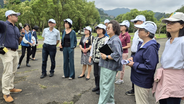 CY Committee on Social Welfare and Environmental Hygiene Affairs inspects the CCA and visits a natural carbon sink afforestation project site (May 8, 2026)

To urge the government to implement Taiwan’s 2050 net-zero emissions target, the Control Yuan (CY)’s Committee on Social Welfare and Environmental Hygiene Affairs conducted an inspection visit to the Climate Change Administration (CCA) of the Ministry of Environment on May 8, 2026. The delegation was led by Committee Convener and CY Member Hsiao Tzu-yu, accompanied by other CY Members, with 11 participants in total. The inspection focused on gaining an in-depth understanding of Taiwan’s effectiveness in reducing greenhouse gases, the issuance of domestic carbon credits, and the implementation of the carbon fee system. The delegation also conducted an on-site inspection of the Shimen Reservoir North Park, a public-private partnership site for a natural carbon sink afforestation project certified by the CCA and implemented by the Water Resources Agency of the Ministry of Economic Affairs. In addition, the delegation heard a briefing on climate-change-related affairs and held a comprehensive discussion.
In recent years, global warming has led to extreme weather events occurring around the world with increased frequency. In response to the impacts of climate change, Taiwan has been implementing a phased roll-out of the National Climate Change Adaptation Action Plan. However, the reduction results of the first and second phases have yet to meet the phased regulatory targets. Meanwhile, as carbon inventory requirements continue to expand, carbon pricing and trading mechanisms, including carbon credits and the carbon fee system, are gradually being promoted. With the launch of the EU Carbon Border Adjustment Mechanism (CBAM), and the emergence of new issues such as preventing corporate greenwashing, Taiwan is now facing challenges related to overloaded regulatory capacity and alignment with international practices. Improvements to supporting measures and regulations for the overall emissions reduction pathway, as well as the strengthening of management and fraud-prevention mechanisms, all require careful attention and continued refinement.
During the inspection, the CY Members expressed concern over a range of issues and offered recommendations, including the measurement of natural carbon sinks, the effectiveness of carbon capture and storage technologies, various carbon reduction methodologies, the establishment of a database on plant carbon sink coefficients, the carbon fee system and the use of the revenues and expenditures thereof, carbon border policies, the quality and capacity of verification bodies, the management of industries at high risk of carbon leakage, and the functions of a future climate change resilience and adaptation center.
In their concluding remarks, the CY Members stated that Taiwan’s climate governance has entered a “deep-water zone,” moving from policy planning into substantive implementation and taking on core challenges. They expressed the hope that the Ministry of Environment will effectively integrate cross-ministerial resources, adopt more proactive and forward-looking administrative measures, and guide Taiwan steadily toward its 2050 net-zero emissions target through public-private collaboration.
Source: Control Yuan, Taiwan


