
 Back
-
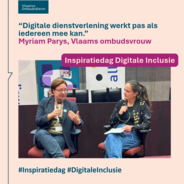 Flemish Ombudsman Myriam Parys speaking at the Digital Inclusion Inspiration Day

On 27 November 2026, Flemish Ombudsman Myriam Parys spoke at the Digital Inclusion Inspiration Day in Brussels. The event was organised by Mediawijs, the Flemish Knowledge Centre for Digital and Media Literacy, together with several partners, including VVSG and SAAMO.
One of the main topics was the future of Digipoints, local places where people can get help with digital questions and services. With Flemish project funding for the Digibanks programme coming to an end, local digital support is under pressure in several places.
Myriam Parys stressed that she will continue to advocate for sustainable funding for accessible digital support close to where people live.
When citizens get stuck online
The Flemish Ombudsman Service sees why this support matters. Citizens may be unable to apply for a benefit, struggle to upload a document or make a mistake in a digital procedure. In some cases, it is difficult to correct the consequences afterwards. Similar digital barriers also emerge more broadly in complaints about public services.
Digipoints can help people overcome these barriers. But digital inclusion does not stop there.
Every public authority remains responsible for making its own services accessible. People who cannot complete a procedure online should have another way to access the service, for example by telephone, on paper or in person. This principle is also reflected in the Flemish Service Charter, which combines digital services with alternative channels and personal contact.
Learn from local digital support
Myriam Parys also encouraged public authorities to listen to the people who provide digital support every day. They see where citizens struggle and where government letters, digital applications or procedures could be improved.
“The practical knowledge and experience of those providing digital support deserve a place in decisions about digital public services and about the funding of Digipoints.” - Myriam Parys, Flemish Ombudsman
Their experience can help public authorities improve digital services before more citizens encounter the same barriers.
Ultimately, digital inclusion is about more than helping people use digital tools. It is about making sure that digitalisation does not prevent anyone from accessing public services.
Source: Flemish Ombudsman Service, Belgium


